
At first glance, granola and brittle can look surprisingly similar. Both are golden, crunchy, and often studded with nuts or seeds. Both rely on a sweetener to bring everything together. And both have a way of disappearing quickly once you start snacking.
But despite these surface similarities, granola and brittle are fundamentally different foods. They’re built using different methods, serve different purposes, and show up in the kitchen in very different ways. Understanding what sets them apart makes it easier to use each one with intention—and also opens the door to something that sits comfortably between them.
Granola: The Wholesome Cluster
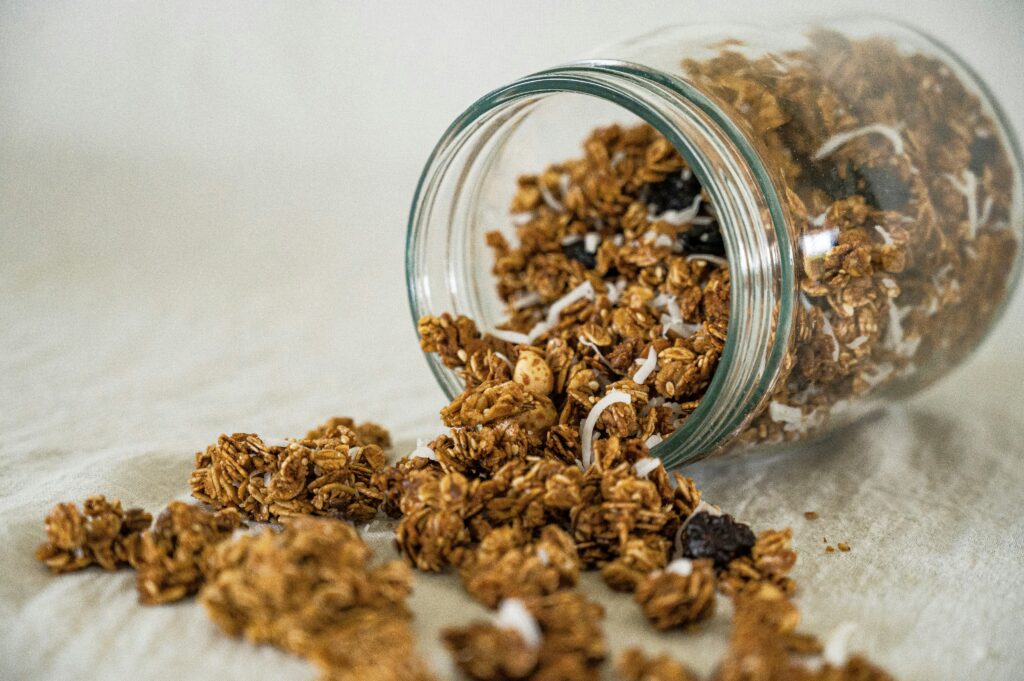
Granola is best known as a baked breakfast and snack staple. It’s designed to be flexible, filling, and easy to pair with other foods.
At its core, granola is a mixture of rolled oats, nuts or seeds, oil, and a liquid sweetener like honey or maple syrup, baked until crisp and lightly golden.
Key characteristics:
- Primary ingredient: Rolled oats (sometimes paired with other whole grains)
- Texture: Loose clusters that are crunchy with a bit of chew
- Preparation: Baked low and slow, often stirred partway through
- Common uses: Breakfast bowls, yogurt toppings, trail mix, everyday snacking
- Overall role: A nourishing, adaptable staple meant to be eaten often
Granola’s strength is its versatility. It’s meant to layer, mix, travel, and hold up across meals.
Brittle: The Solid Sheet
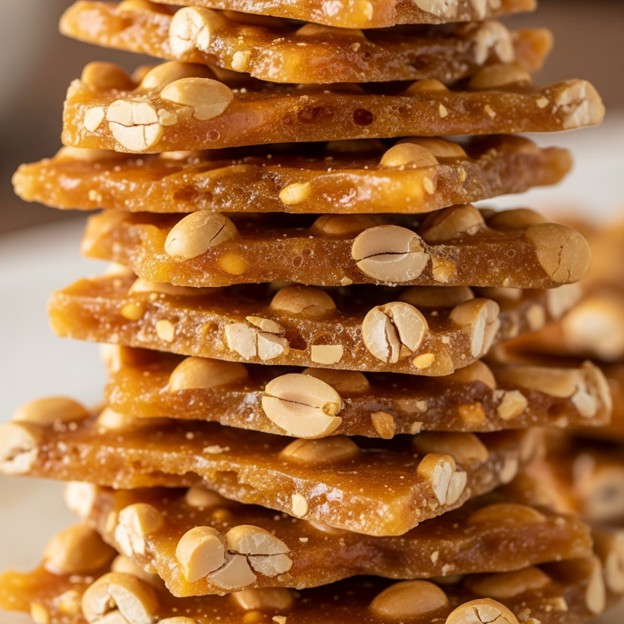
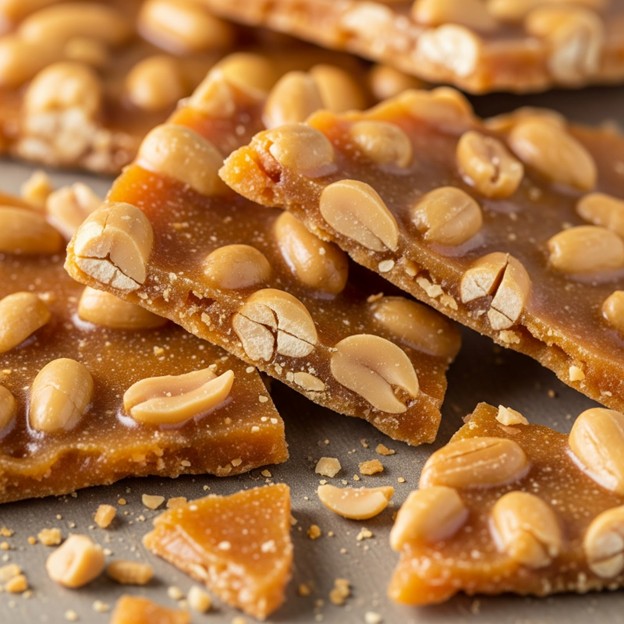
Brittle lives in a different category altogether. It’s a classic confection defined by caramelized sugar and a sharp, glass-like snap.
Traditional brittle is made by cooking sugar to a high temperature until it reaches the hard-crack stage, then stirring in nuts before spreading the mixture into a thin sheet to cool and harden.
Key characteristics:
- Primary ingredient: A cooked sugar syrup
- Texture: Thin, hard, and brittle—breaking into irregular shards
- Preparation: Cooked rather than baked, with precise timing
- Common uses: Candy, dessert toppings, holiday treats
- Overall role: A focused, indulgent sweet
Brittle isn’t meant to be flexible or filling. It’s meant to be intense, crisp, and deliberate.
The Fundamental Difference: What Holds Everything Together
The clearest distinction between granola and brittle comes down to how their ingredients are bound.
| Feature | Granola | Brittle |
|---|---|---|
| Binding method | Oats, oil, baked sweetener | Caramelized sugar |
| Structure | Loose clusters | Solid sheet |
| Texture | Crunchy with some chew | Solid sheet |
| Flavor focus | Toasted grains, nuts, spices | Deep caramel |
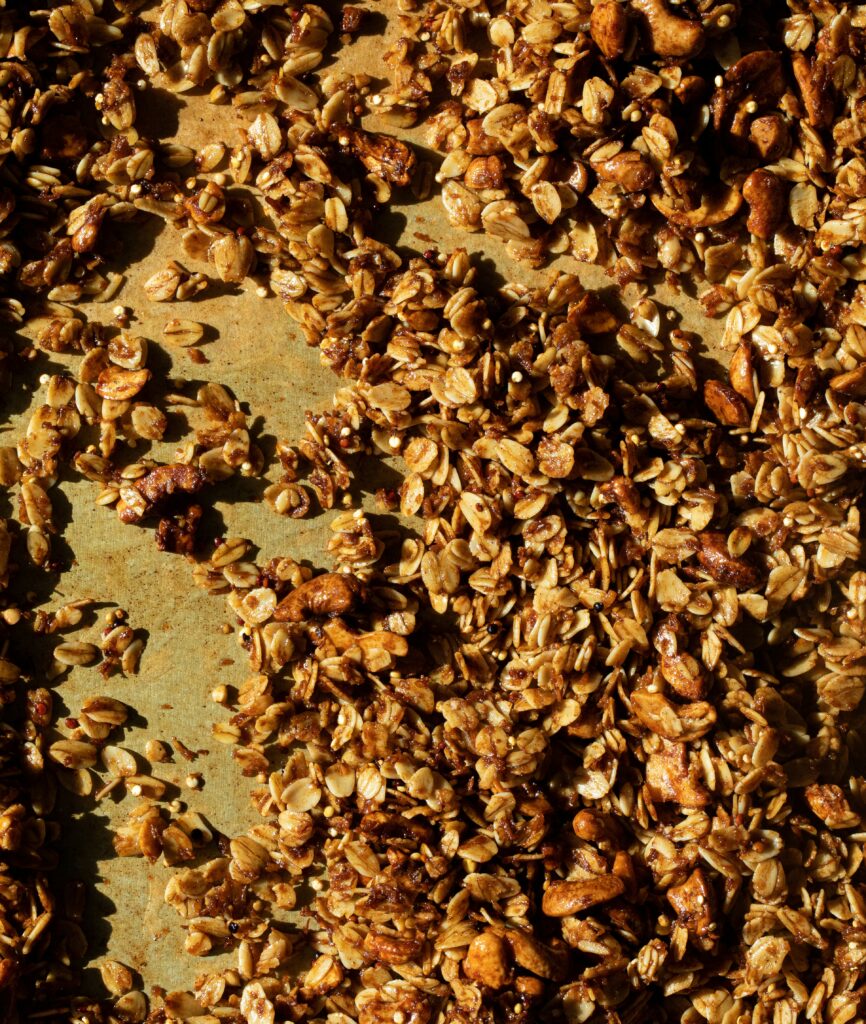
Granola is baked.
Brittle is cooked candy.
That difference shapes how each one behaves—and how it’s used.
And then there’s seeded brittle—a crunchy in-between that borrows from both, without fully belonging to either.
What Is Seeded Brittle, Exactly?
If traditional brittle and granola sit at opposite ends of the crunchy snack spectrum, seeded brittle lives comfortably in the middle.
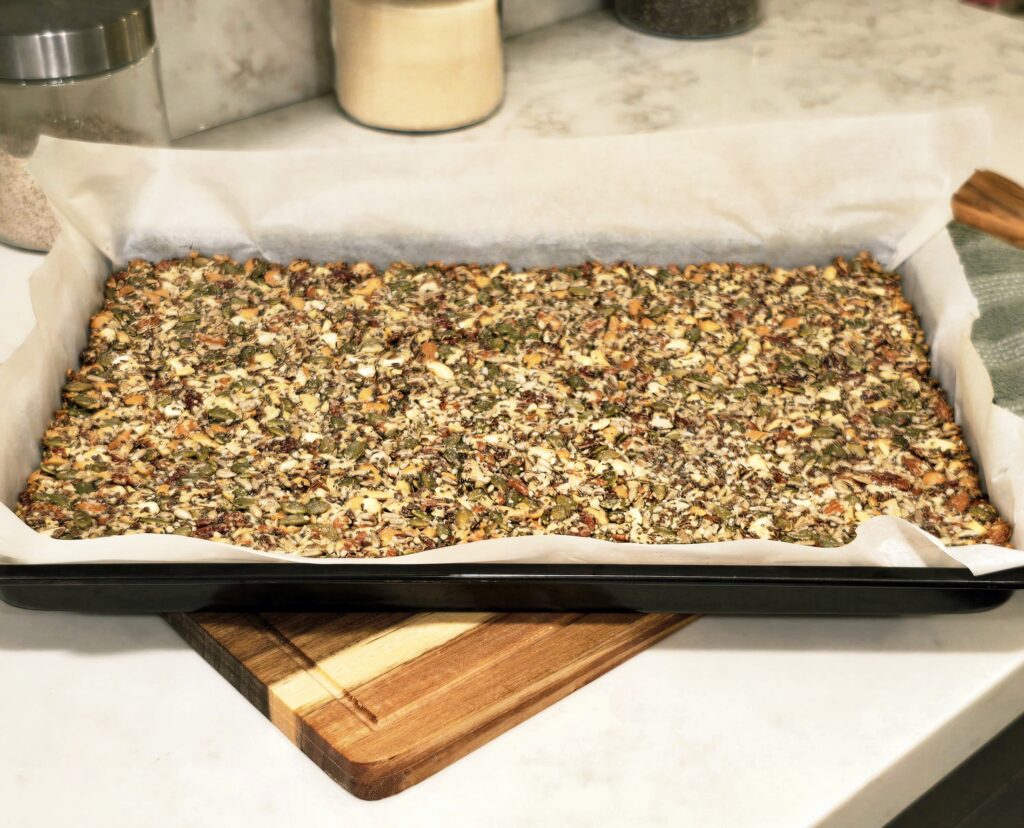
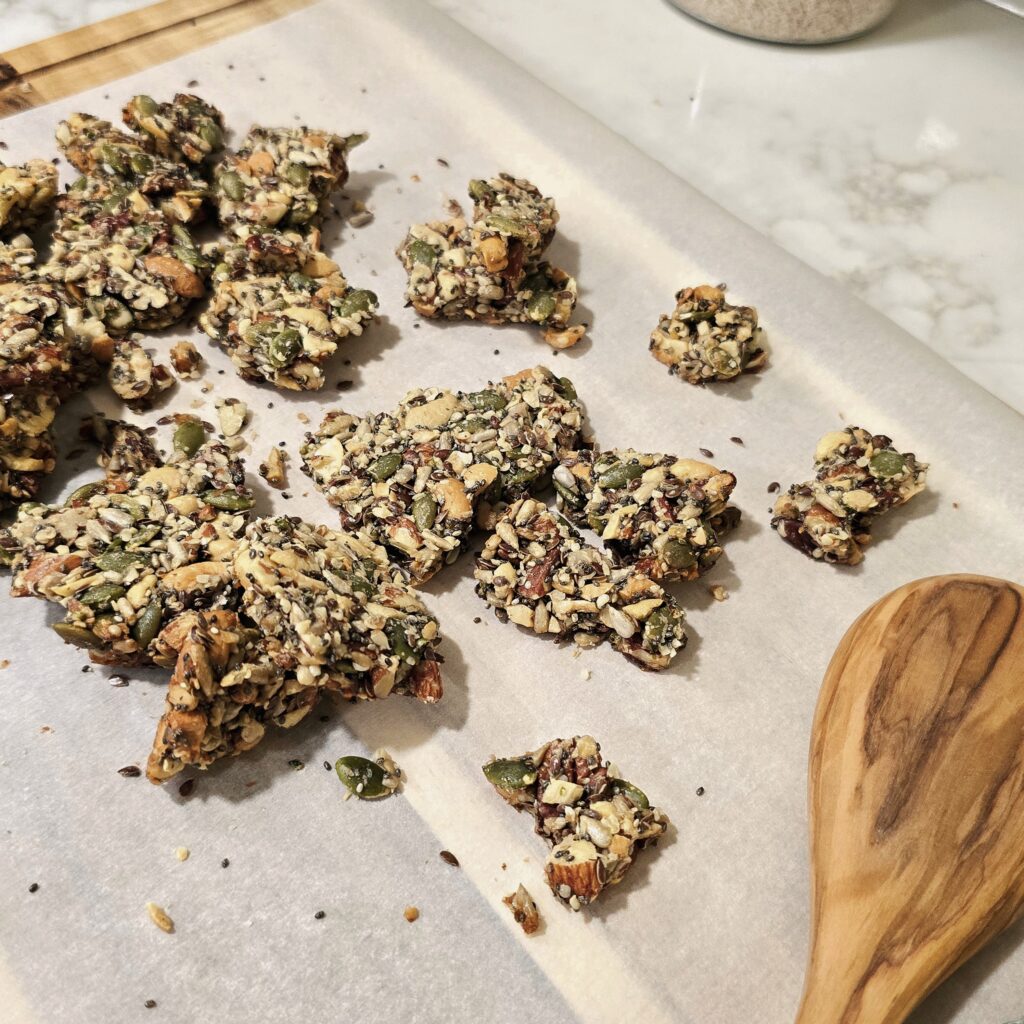
Seeded brittle is made with a blend of nuts and seeds—such as pumpkin seeds, sunflower seeds, sesame seeds, and nuts—bound together with a sweetener that caramelizes as it bakes. Unlike classic peanut brittle, it doesn’t rely on white sugar or corn syrup, and unlike granola, it doesn’t depend on oats or oil to form clusters.
Instead, the mixture bakes into a thin, crisp sheet that snaps apart into irregular pieces, much like traditional brittle. The flavor is deeply caramelized and crunchy, but the texture is slightly more forgiving. While it can be enjoyed in bold shards, it’s also easy to crumble into smaller clusters using your hands or the end of a wooden spoon.
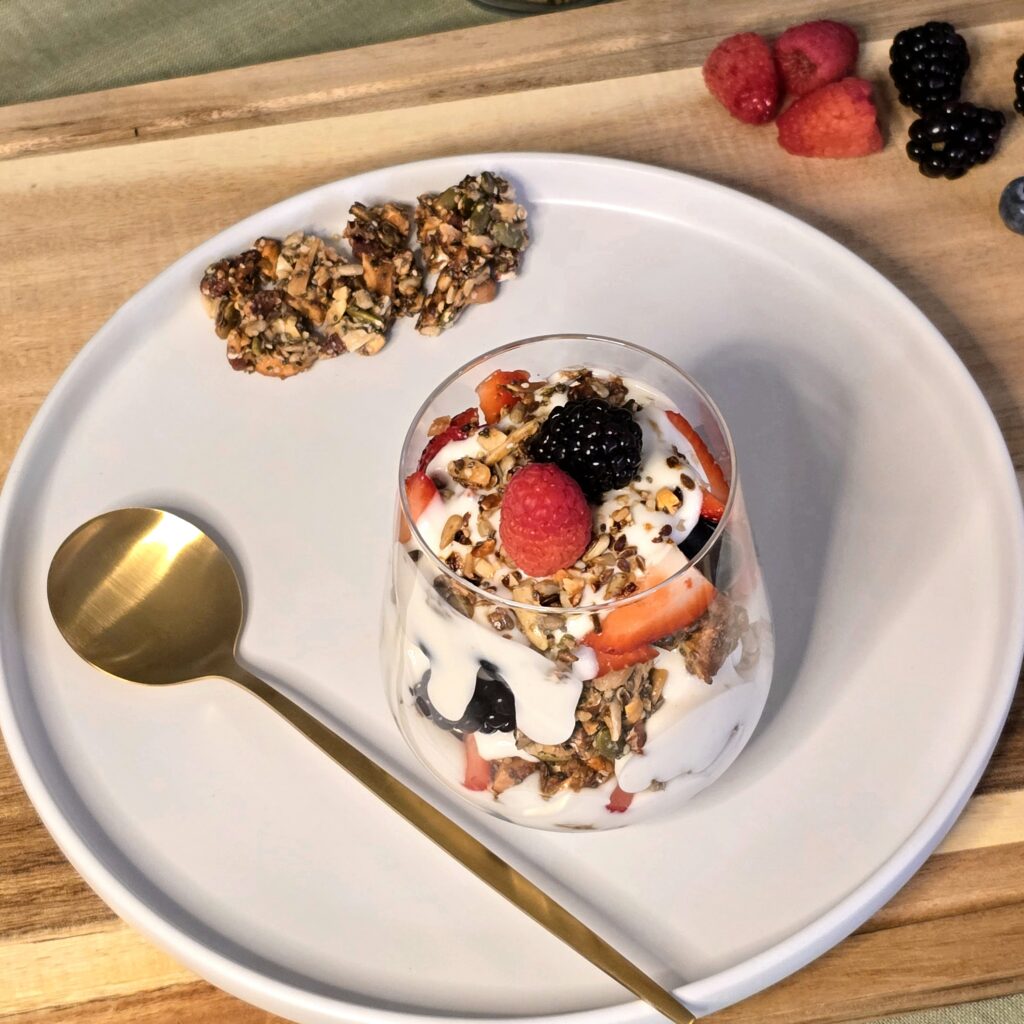
That flexibility makes seeded brittle comfortable in more than one role—snacked on its own, layered into yogurt, or used as a textural contrast where granola might usually appear. Because it’s baked rather than cooked to a precise hard-crack stage, it’s also far more approachable to make, relying on familiar pantry ingredients and straightforward technique.
It’s not quite granola and not quite candy, which is exactly what makes it so useful—and so enjoyable.
Granola, Brittle, and Seeded Brittle: Different Tools for Different Moments
Granola and brittle are often compared, but in practice, they rarely compete for the same role. Granola tends to show up where flexibility and nourishment matter—paired with fruit, stirred into yogurt, or eaten as a snack that travels well. Brittle usually appears when bold crunch and sweetness are the point.
Seeded brittle doesn’t replace either one. It adds another option.
Because it snaps like brittle but can also be crumbled and used more loosely, seeded brittle fits into spaces where neither granola nor traditional brittle quite does. It offers more crunch and caramelized flavor than granola, without committing fully to a candy-only role.
Thinking of seeded brittle as part of your cooking arsenal—not an alternative—makes it easier to use creatively and intuitively.
That same way of thinking applies here as well.
Granola, brittle, and seeded brittle each earn their place in the kitchen for different reasons. Understanding how they’re made—and how they behave—makes it easier to reach for the right one at the right moment, or to use them in ways you hadn’t considered before.
Sometimes that means sticking with what’s familiar. Other times, it means adding something new to the rotation.